Gut Microbiome 101:
If fibre is your gut’s structural foundation, your microbiome is the bustling city that lives on it.
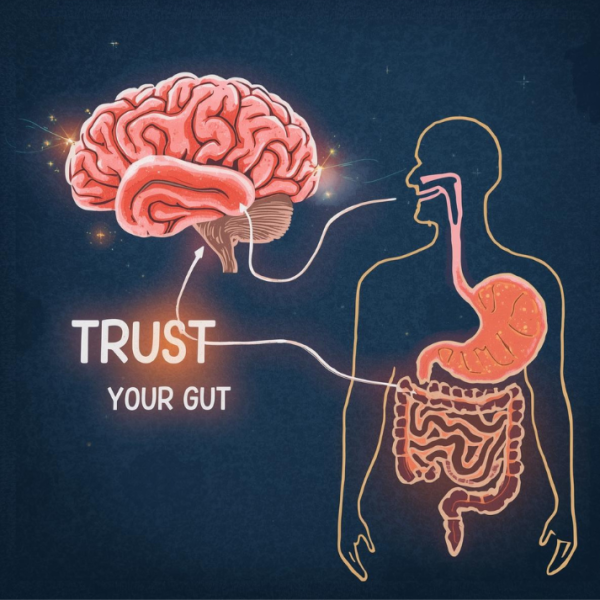
If fibre is your gut’s structural foundation, your microbiome is the bustling city that lives on it.
Your gut is home to trillions of microbes; bacteria, fungi, and other tiny organisms. Older estimates suggested a 10:1 ratio of bacteria to human cells, but more precise calculations now indicate there are roughly 38–39 trillion bacteria, giving a ratio of about 1.3:1 with human cells. These microbes are mostly found in the large intestine, weigh around 1–2 kg, and include thousands of different species.
These tiny residents do a lot more than just help you digest food. They support your immune system, help produce essential vitamins like K and B12, regulate metabolism, and even influence your mood and mental health through the gut-brain axis. A diverse, balanced microbiome is key to thriving both physically and mentally.
Fibre feeds your gut
Remember our last discussion about fibre?
Soluble fibre in fruits, vegetables, oats, and legumes isn’t just great for slowing blood sugar spikes, it’s also food for your good bacteria.
Think of soluble fibre as a prebiotic: it feeds microbes and helps them produce short-chain fatty acids, which protect your gut lining, reduce inflammation, and support metabolism.
Insoluble fibre, like the skins of apples, carrots, or sweet potatoes, acts as scaffolding to help keep food moving efficiently.
Both types of fibre work together to create a thriving environment for your microbes.
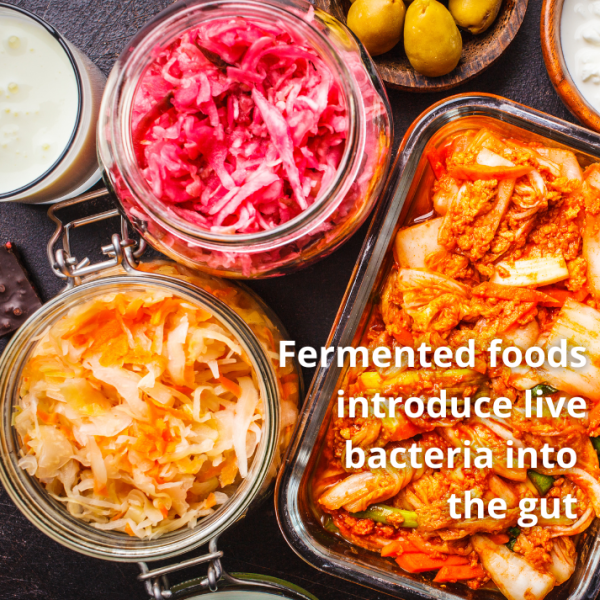
Fermented foods boost diversity
While fibre feeds your existing bacteria, fermented foods like yoghurt, kefir, sauerkraut, kimchi, and miso introduce live bacteria into your gut.
These probiotics can help balance your microbiome and support digestion.
Just remember to choose minimally processed options with live cultures for the best benefit.
Processed foods can harm your microbiome
Ultra-processed foods like sugary drinks, packaged snacks and refined carbs can reduce microbial diversity and encourage growth of the wrong types of bacteria.
Over time, this can lead to inflammation, digestive issues, and even impacts on metabolism and mental health.
That’s why real, whole foods are your microbiome’s best friend.
Practical ways to nourish your microbiome
- Eat a variety of plant foods: Different vegetables, fruits, legumes, nuts, and seeds feed different bacteria. Diversity is key.
- Include both soluble and insoluble fibre: Whole fruits, vegetables, oats, and whole grains.
- Incorporate fermented foods: Yogurt, kefir, kimchi, sauerkraut, miso.
- Limit ultra-processed foods: Reduce sugar, refined grains, and packaged snacks.
- Avoid over-blending fruits and vegetables: Whole foods preserve fibre, which feeds your gut bacteria better than juices or smoothies.
The takeaway?
Your gut microbiome is a powerful ally for health, energy, digestion, and even mood.
By eating a diverse range of fibre-rich, whole foods and including fermented foods, you create an environment where beneficial bacteria can thrive.
When your microbiome is happy, your body and mind are more resilient, better fuelled, and more balanced.
Think of it like this: you’re the mayor of a bustling microbial city. The better you feed and care for your citizens (your gut bacteria) the healthier, stronger, and happier your whole body becomes.