Restore Prehabilitation & Recovery's Specialisation
Restore specialises in movement therapy, joint mobility and strength, Fascial Stretch Therapy, and scar remediation therapy.
We work with people who want to move better, feel stronger, and improve how their body functions whether they are dealing with stiffness, post-surgical restriction, scar tissue, injury history, or simply a body that does not feel as free as it should.
Do I reach for massage or not...?
When people feel tight, stiff, sore, or restricted, one of the first things they often think of is booking a massage.
And for good reason.
Traditional massage can be incredibly helpful for easing muscle tension, calming the nervous system, improving circulation, and giving people a sense of relief when the body feels overloaded.
But Fascial Stretch Therapy, or FST, is quite different.
While both approaches work with the body’s soft tissues, they do so in different ways — and the right choice depends on what you are hoping to improve.
At Restore Prehabilitation & Recovery, we use Fascial Stretch Therapy, scar remediation therapy, joint-specific mobility, and strength training as part of a wider movement therapy approach.
The aim is not just to help people feel better for a short period of time, but to help them move better, function better, and build more confidence in their body.
What is traditional massage?
Massage usually involves applying pressure directly into the muscles and soft tissues.
This may include kneading, compression, friction, trigger point work, or deeper pressure techniques. The goal is often to reduce muscle tension, ease soreness, improve circulation, and help the body relax.
Massage can be a great option if you feel generally tight, stressed, achy, or in need of recovery.
However, massage is usually more tissue-pressure focused. You are generally lying still while the therapist works into areas of tension.
For many people, that relief is valuable.
But if the same tightness keeps returning, or if the restriction is more about how your joints move and how your body organises movement, massage alone may not be enough.
What is Fascial Stretch Therapy?
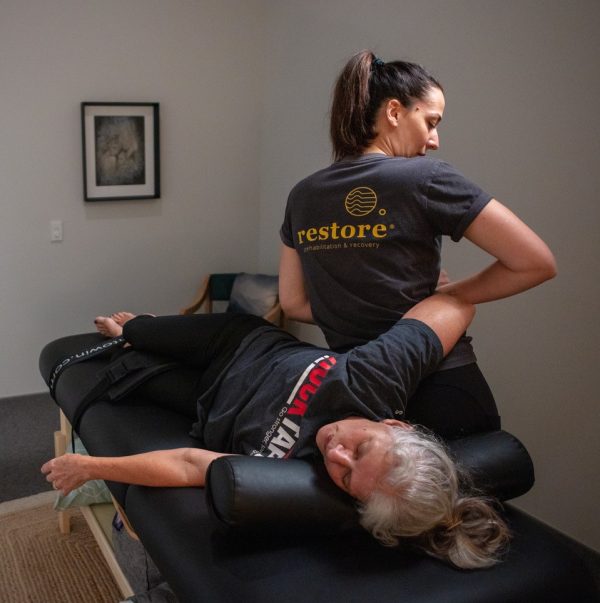
Fascial Stretch Therapy is a table-based assisted stretching system.
Rather than pressing into the tissue, the practitioner gently moves your body through supported stretches and movement patterns. This can involve working with the hips, spine, shoulders, rib cage, legs, arms, and surrounding connective tissue to help the body move more freely.
FST is not just about “stretching muscles”. It works with the joints, fascia, nervous system, and soft tissues together.
The aim is to improve mobility, reduce restriction, and help the body feel less guarded.
It can be particularly useful for people who feel like they are constantly tight, who stretch on their own but do not seem to get lasting change, or who feel restricted through areas such as the hips, lower back, neck, shoulders, rib cage, or ankles.
A simple way to think about it is this:
Massage works more into the tissues.
FST works more through movement.
Both can feel good. Both can have value. But they are not the same thing.
Feeling looser is helpful — but can you keep the change?
This is where the Restore approach becomes different.
For many people, passive treatment gives short-term relief. They feel better after the session, but a few days later the same tightness or restriction returns.
That does not mean the treatment failed. It often means the body has not yet learned how to use, control, or strengthen the new range available to it.
This is why movement therapy matters.
If FST helps create more freedom through a joint or region of the body, we then want to help the body understand what to do with that freedom.
That might mean improving joint control, building strength in new positions, increasing awareness of how a joint moves, or retraining movement patterns that have become limited over time.
The hands-on work can open the door.
Movement therapy helps you walk through it.
What do we mean by movement therapy?
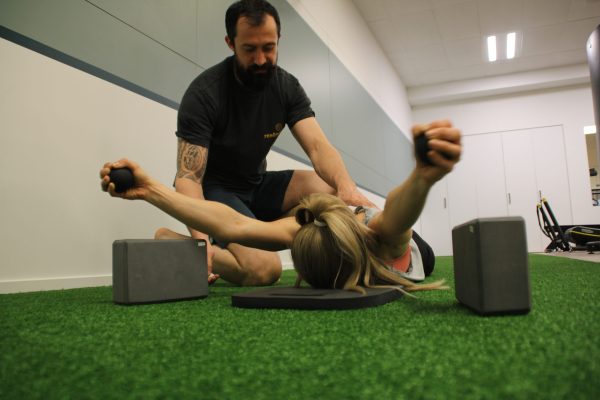
Movement therapy at Restore is not generic stretching, general fitness, or a random exercise programme.
It is targeted work designed to improve how your joints, tissues, and nervous system work together.
We look at how individual joints move, where your body may be compensating, and what areas need more mobility, control, or strength.
This may include:
- joint-specific mobility work
- active range of motion training
- controlled articular rotations
- strength training through usable ranges
- trunk and spinal control
- hip, shoulder, ankle, or rib cage mechanics
- breathing and pressure work where appropriate
- progressive loading to help the body trust movement again
Rather than only asking, “What muscle feels tight?”, we ask:
- Which joints are not moving well?
- Which areas are doing too much?
- Which areas are not doing enough?
- Can you control the range you have?
- Can you produce strength there?
- Can your body tolerate load in the positions life or sport asks of it?
This gives us a much clearer picture of why someone may feel restricted, stiff, vulnerable, or unable to move the way they want.
Why joint-specific training matters
Every joint in the body has a job.
Hips need to rotate, extend, flex, and support force.
Shoulders need to move freely while remaining controlled.
Ankles need to adapt to the ground.
The spine needs the ability to segment, stabilise, and distribute movement.
The rib cage needs to move well enough to support breathing, posture, and upper body function.
When one area loses movement or control, another area usually has to compensate.
For example, if the hips do not rotate well, the lower back may end up taking more of the load.
If the shoulders lack controlled range, the neck or upper back may become overworked.
If the ankle is stiff, the knee, hip, or foot may have to adapt around it.
This is why we do not just chase the tight spot.
The area that feels tight may not always be the area that needs the most work. Sometimes it is the area doing extra work because something else is not contributing properly.
Joint-specific training helps us identify and improve those missing links.
Where FST fits into joint-specific training
FST can be a very useful entry point.
If someone is too guarded, restricted, or uncomfortable to access certain positions on their own, assisted table-based work can help the body experience movement in a supported way.
For example, FST may help improve hip mobility, shoulder movement, spinal comfort, or general tissue freedom.
But the next step is important.
Once that extra range is available, we want to reinforce it with active work. That may involve specific mobility drills, end-range control, isometric strength, slow controlled movement, or progressive strength training.
This helps shift the result from “I feel looser today” to “I can actually move better and use this range”.
That is the difference between temporary relief and building a more capable body.
Where scar therapy fits in
If you have scars, this is where the conversation becomes even more important.
Scars are not just marks on the skin. They are areas of tissue change.
After surgery, injury, burns, C-sections, breast surgery, joint replacements, abdominal surgery, or trauma, scar tissue can sometimes become tight, sensitive, thickened, numb, stuck, or restricted.
For some people, scars can also influence how the surrounding area moves.
For example, a scar across the chest or breast area may affect shoulder movement, rib cage comfort, or how freely the upper body feels. An abdominal scar may affect trunk movement, breathing mechanics, hip extension, or how comfortable certain positions feel. A joint replacement scar may influence how the tissue glides around the joint.
This does not mean scars are “bad”. Scars are part of the body’s healing process.
But sometimes they need support.
Why scars can affect movement
Healthy movement relies on tissues being able to slide, glide, stretch, and adapt.
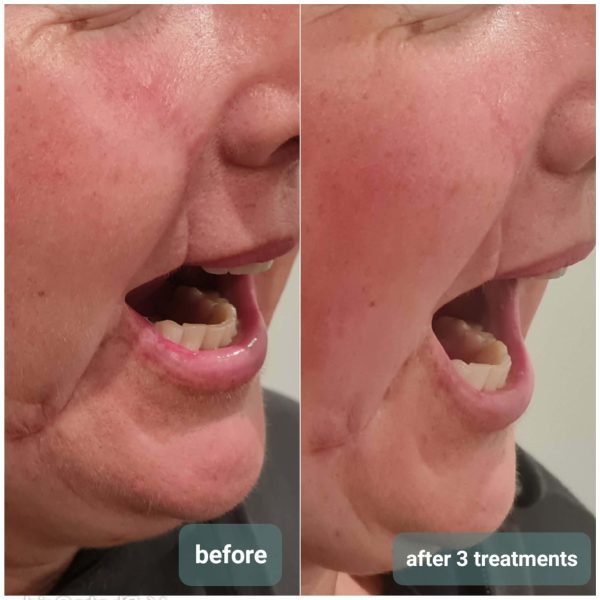
When scar tissue becomes restricted, it can reduce that natural tissue movement. The body may then start to protect the area, avoid certain positions, or create compensation elsewhere.
This is why someone may feel tightness, pulling, sensitivity, numbness, or restriction around a scar even months or years after the original surgery or injury.
Scar therapy aims to gently improve how the scar and surrounding tissues move.
It is not about aggressively breaking scar tissue down.
It is careful, respectful, hands-on work designed to help the area feel more comfortable, more mobile, and more integrated with the rest of the body.
Combining FST, scar therapy, and movement therapy
When someone has both movement restriction and scar tissue, combining FST with scar remediation therapy and joint-specific training can be very useful.
FST may help improve overall mobility through the joints, fascia, and nervous system.
Scar therapy may help improve the local tissue quality and movement around specific scars.
Movement therapy then helps the body control, strengthen, and retain those improvements.
For example, someone recovering from breast surgery may not only need work around the scar itself. They may also benefit from gentle shoulder mobility, rib cage movement, breathing mechanics, and upper body strength work.
Someone with an abdominal scar may need support around the scar tissue, but also trunk movement, hip mobility, spinal control, and gradual strength work.
Someone with an old orthopaedic scar may need scar therapy alongside joint mobility and progressive strengthening to restore confidence in the area.
This is why we do not see FST, scar therapy, and movement therapy as separate, isolated services. They often work best when they are integrated.
Which approach is right for you?
Massage may be helpful if you want general relaxation, reduced muscle tension, or short-term relief from soreness.
Fascial Stretch Therapy may be a better fit if you feel stiff, restricted, or limited in how your body moves.
Scar therapy may be appropriate if you have a scar that feels tight, stuck, sensitive, numb, thickened, uncomfortable, or like it is affecting your movement.
Movement therapy ties it all together by helping the body use and retain the improvements gained from hands-on work.
At Restore, our goal is not just to treat the area that feels tight.
We want to understand how your body is moving, where restriction may be coming from, and what needs to improve so you can feel more capable and confident.