Fascial Stretch Therapy™, often called FST™, is a table-based assisted stretching system designed to help improve mobility, movement access and how the body feels through guided, hands-on stretch work.
At Restore, FST™ sits inside our wider movement pathway. It is not treated as a quick stretch or passive recovery add-on. It is used as specialist support for people who need more individualised, hands-on input.
Fascial Stretch Therapy™ in simple terms
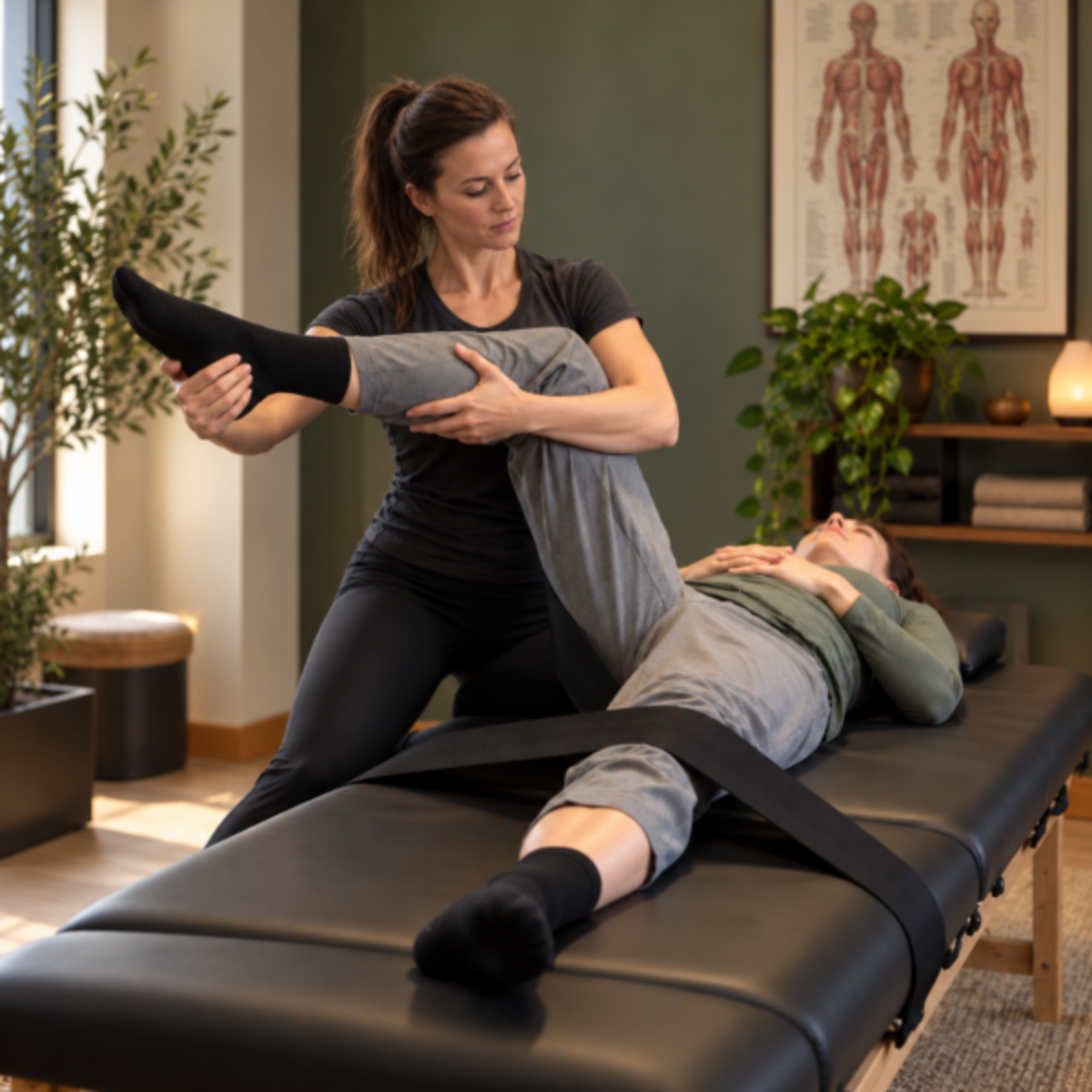
Fascial Stretch Therapy™ is assisted stretching performed on a treatment table.
You are guided and supported through movements designed to influence the connective tissue system, joints, muscles and nervous system.
Unlike stretching on your own, FST™ allows the practitioner to support your body, adjust the angles, respond to what they feel and help create movement access that may be difficult to achieve by yourself.
The aim is not to force range.
The aim is to help your body access movement with less guarding, better ease and more useful carryover into how you move.
Why Restore uses Fascial Stretch Therapy™
Restore is built around the idea that external results start with internal control.
Sometimes, before someone can build better strength, mobility or movement capacity, they need help creating access.
FST™ can be useful when the body feels restricted, guarded, compressed, stiff or unable to access certain positions comfortably.
At Restore, we use FST™ as part of a bigger picture.
That may include:
- Hands-on assisted stretching
- Movement assessment
- Breath and nervous system awareness
- Joint-specific mobility work
- Simple follow-up movements
- Restore Online support
- Movement Profile recommendations
- Specialist Support where required
The session is not the whole pathway.
It is one tool that can help your body access more options, so you can then learn how to use and maintain them.
What makes Restore’s FST™ different?
Assisted stretching is becoming more common.
But not all assisted stretching is delivered at the same level.
Restore’s FST™ is different because it is delivered by highly trained practitioners with advanced experience in movement assessment, joint-specific training, mobility, scar work, specialist support and long-term client care.
We do not treat FST™ as a generic stretch routine.
We use it as part of a movement-health pathway.
That means we are asking:
- What is your body protecting?
- What range can you access?
- What range can you control?
- What does your history tell us?
- What does your body need next?
- How do we help you keep the change?
This is where Restore’s approach is different from a franchise-style assisted stretching model.
The session is not just about being stretched.
It is about understanding what your body needs and connecting the session to the right next step.
Level 4 FST™ at Restore
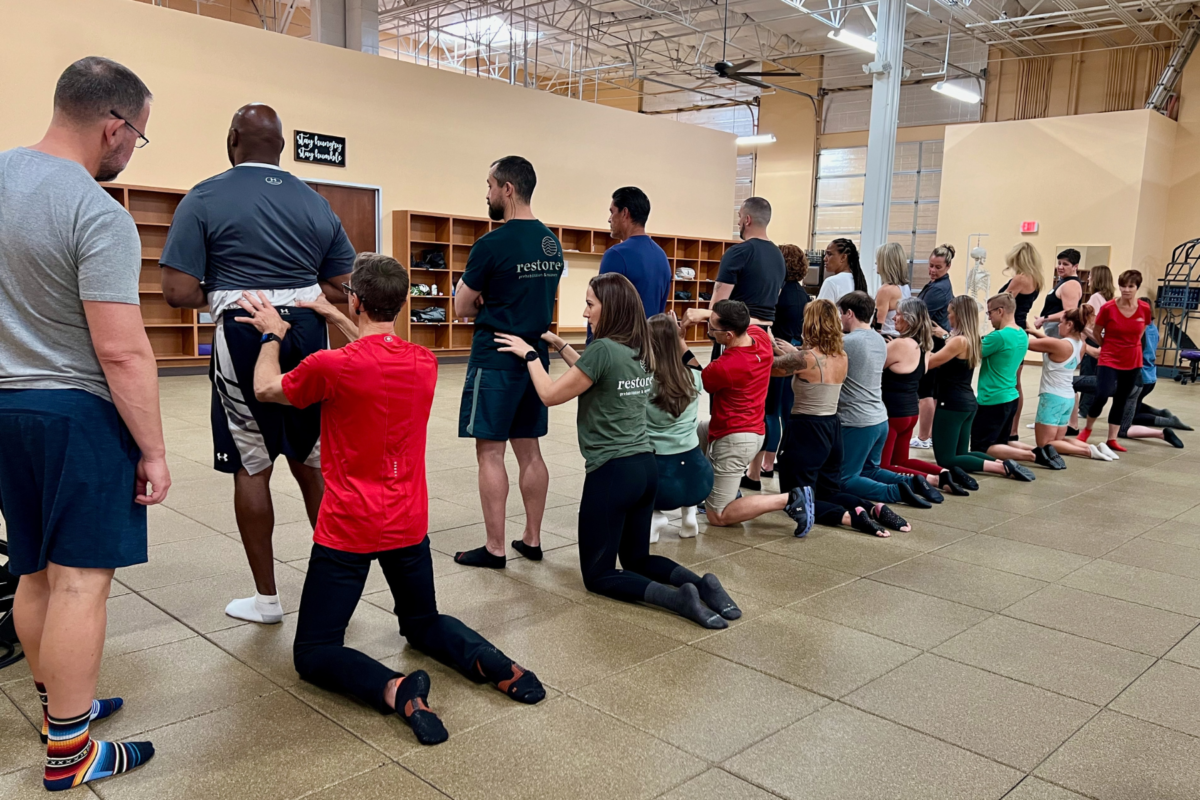
Restore provides Level 4 FST™.
This matters because Level 4 represents advanced FST™ training, with a focus on more detailed assessment, integration and sports-specificity.
Barry and Liv are Level 4 FST™ practitioners. Based on our current credential position, Restore is the only provider of FST™ at this level in New Zealand, and part of a very small group of Level 4 practitioners worldwide.
FST™ certification also requires ongoing standards. Level 4 certification is licensed for a two-year period, with recertification required to continue using the current certification designation.
This is important for clients because it means the method is not something we learned once and left behind.
It requires ongoing professional accountability, refinement and recertification.
FST™ vs Assisted Stretching Studios
Assisted stretching studios can be useful for people who want a general stretch experience. Restore is different. We are not a high-volume stretch studio. We are a specialist movement-health practice using FST™ as part of a wider pathway that may include assessment, scar therapy, joint-specific mobility, Kinstretch®, Functional Range Conditioning®, individualised programming and Restore Online.
-
Studio-style assisted stretching
Often best for people who want a general assisted stretch, regular recovery support or a broad wellness experience.
-
Restore FST™
Best for people who want a more specialist, assessment-informed approach from highly trained practitioners who can connect hands-on work into a wider movement plan.
FST™ vs Massage
Fascial Stretch Therapy™ is not massage.
Massage generally works through pressure, soft-tissue techniques and local tissue treatment.
FST™ uses guided, assisted movement and stretching to influence mobility, joint access, connective tissue, body awareness and the nervous system.
Both can feel helpful, but they are not trying to do the same thing.
FST™ may be a better fit if you feel like your body needs to move differently, not just have tension worked on.
What can FST™ help with?
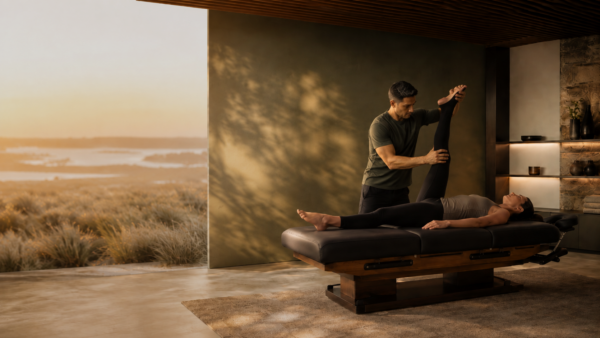
FST™ may be useful for people who feel:
- Stiff
- Restricted
- Compressed
- Guarded
- Tight through the hips, spine, shoulders or rib cage
- Limited by old injuries
- Restricted after long periods of sitting or training
- Unable to access positions comfortably
- Like stretching on their own is not creating lasting change
- Like they need hands-on support before returning to movement
FST™ is not about forcing flexibility.
It is about helping the body access more movement, then connecting that access to better control, strength and capacity.
Who is Fascial Stretch Therapy™ for?
FST™ may be suitable if you are asking:
I feel stiff and restricted.
You want hands-on support to help your body access more movement.
I stretch, but nothing seems to change.
You may need a more supported approach that helps reduce guarding and improve usable movement access.
I want more than a massage.
You want hands-on work that connects into movement, mobility and the wider body system.
I train hard and feel compressed.
You want support for recovery, range and movement quality alongside your training.
I have an old injury or movement limitation.
You want someone to consider your history, movement options and the way your body is currently organising itself.
I am an existing Restore client.
You want hands-on support that connects into your current Restore pathway, online training or individualised work.
I need specialist support, but not necessarily weekly appointments.
You want a premium hands-on session that helps guide the next step.
What happens in a Restore FST™ session?
A Restore FST™ session is usually table-based and guided by the practitioner.
Depending on your needs, your session may include:
- A conversation about your history and goals
- A brief movement check or relevant screen
- Assisted stretching on the table
- Breath-led work to help your body settle and respond
- Joint-specific positioning and movement
- A focus on comfort, control and useful range
- Simple follow-up movements where appropriate
- A recommendation for your next step
The session should feel supported, not forced.
We work with your body, not against it.
The aim is not to keep you dependent on hands-on work.
The aim is to use the right support at the right time, then help you build the capacity to keep progressing.
Is FST™ the right first step?
-
Book FST™ directly if:
- You already know you want Fascial Stretch Therapy™.
- You want hands-on assisted stretching.
- You feel restricted, stiff or compressed.
- You are an existing Restore client using FST™ as part of your pathway.
- You want a premium hands-on session with advanced FST™ practitioners.
-
Start with a Movement Profile if:
- You are unsure what your body needs.
- You do not know whether FST™, Restore Online, a programme, a block or specialist support is the right fit.
- You have a complex movement history and want a clearer recommendation first.
- You want your top movement priorities identified before booking hands-on work.
-
Start with Restore Online if:
- You mainly need consistency.
- You want joint strength and mobility training from home.
- You do not currently need hands-on support.
- You want to build your base before seeking specialist input.
How to get the most from FST™
FST™ works best when it is not treated as a stand-alone fix.
To get the most from your session:
- Notice how your body feels before and after
- Pay attention to areas that feel easier, clearer or more accessible
- Use any follow-up movements provided
- Keep building joint control and strength
- Consider Restore Online or Kinstretch® to maintain consistency
- Book a Movement Profile if you want a more complete pathway recommendation
Hands-on work can help create access.
Movement helps you keep it.
Frequently asked questions
What is Fascial Stretch Therapy™?
Fascial Stretch Therapy™ is a table-based assisted stretching system designed to help improve mobility, movement access and how the body feels through guided hands-on stretch work.
Is FST™ just stretching?
No. FST™ is not the same as passive stretching on your own. It is therapist-assisted and uses guided movement, positioning and stretch work to influence the body as a connected system.
Is FST™ the same as massage?
No. Massage generally uses pressure and soft-tissue techniques. FST™ uses assisted movement and stretching to support mobility, joint access, body awareness and the nervous system.
What makes Restore’s FST™ different?
Restore delivers FST™ as part of a wider movement pathway. We combine advanced FST™ training with movement assessment, joint-specific training, Restore Online, Kinstretch®, FRC®, Scar Therapy and individualised support where appropriate.
What does Level 4 FST™ mean?
Level 4 FST™ is advanced practitioner training through Stretch to Win. It focuses on advanced assessment and sports-specificity. Restore currently provides the highest level of FST™ available in New Zealand.
How often do FST™ practitioners recertify?
Level 4 FST™ certification is licensed for two years, with recertification required to continue using the current certification designation.
Is FST™ painful?
FST™ should not feel forced. The aim is to work with the body, not push through resistance. Sensation is normal, but the session should feel supported and appropriate to you.
Who is FST™ suitable for?
FST™ may suit people who feel stiff, restricted, compressed, guarded, limited by old injuries, or in need of hands-on support to improve movement access.
Can FST™ help athletes?
Yes. FST™ may be useful for athletes who want support with mobility, recovery, range, body awareness and movement capacity. Restore’s approach connects the session to the wider demands of training and sport.
Can FST™ help if I sit a lot?
It may be useful if you feel restricted, compressed or stiff from long periods of sitting. We may also recommend Restore Online or Kinstretch® to help maintain movement consistency.
Do I need a Movement Profile before FST™?
Not always. You can book FST™ directly if you know that is what you want. If you are unsure what your body needs or which pathway is right, start with a Movement Profile.
Is Restore FST™ like StretchLab?
No. StretchLab is a large assisted-stretching franchise model. Restore provides specialist FST™ inside a broader movement-health pathway, delivered by highly trained Level 4 practitioners with a focus on assessment, interpretation, movement capacity and next-step planning.
Where is FST™ available?
FST™ may be available through Restore’s North Canterbury home-based setting, Christchurch availability or selected appointment options depending on the current schedule.
What happens after an FST™ session?
Your next step may be simple follow-up movements, Restore Online, Kinstretch®, a Movement Profile, Individualised Programming, Scar Therapy, another FST™ session or another Restore pathway depending on what your body needs.
Ready to experience Fascial Stretch Therapy™ with Restore?
Book FST™ directly if you already know you want hands-on assisted stretching with Restore.
Explore Specialist Support if you want to understand how FST™, Scar Therapy, Individualised Programming and selected 1:1 movement work fit together.
Book a Movement Profile if you are unsure what your body needs.